
Space Force tasks a dozen companies for Golden Dome space-based interceptors
The service pledged it would demonstrate an “initial capability” for the orbital missile killers by 2028.
The service pledged it would demonstrate an “initial capability” for the orbital missile killers by 2028.

In total, the agency is providing awards to 1,014 "qualifying offerors" for the Scalable Homeland Innovative Enterprise Layered Defense (SHIELD) program, under deals that could eventually total $151 billion over 10 years.


L3Harris’ launched effects portfolio comes from a pedigree of proven capabilities and decades of experience.
“I predict that what you're going to see is something that is far more… limited, both in terms of the number of threats that are feasibly able to be stopped, and also in terms of the area that [can be] defended against,” said Tom Karako with CSIS.

The satellites will need to be defended "not only from adversary kinetic or local orbital issues, but also from cyber attacks, electronic jamming and laser attacks," said Patrick Binning, a professor at the Johns Hopkins Whiting School of Engineering.

The plan faces some skepticism from industry, citing massive investment requirement for potentially relatively little.

Gen. Michael Guetlein, the Pentagon Golden Dome czar, said on Tuesday that the "real technical challenge" for the effort will be building space-based interceptors to knock down enemy missiles in their boost phase.

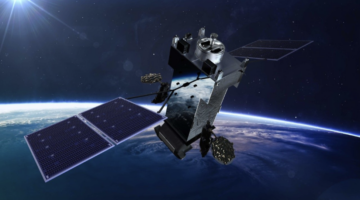
Multi-orbit mission capabilities are accelerating decision making across domains.

The inclusion of space-based interceptors is a particularly hard nut for Moscow to swallow, given long-standing Russian belief that such weapons are aimed at undercutting the country’s nuclear retaliatory capability following a US first strike.